
Working Remotely in Osaka: A Digital Nomad Guide to Japan’s Kitchen
Disclosure: This blog is reader-supported, and some posts contain affiliate links. If you make a booking, I may earn a small commission—at no extra cost to you. Thank you for keeping me writing and doing what I love!
Osaka is best known as “Japan’s Kitchen,” but there’s much more to this city than food (okay, there’s seriously great food, though!).
In the eyes of a digital nomad, Osaka has got it all:
- convenient transport
- great coffee shops and coworking spaces
- a vibrant city life and social scene
- affordable (ish) accommodation
- and an endless list of things to do, including temples, festivals, bars/nightlife, zen gardens, and much more. (Not to mention Universal Studios/Super Nintendo World Japan, which we’ve been to twice!!) 🍄
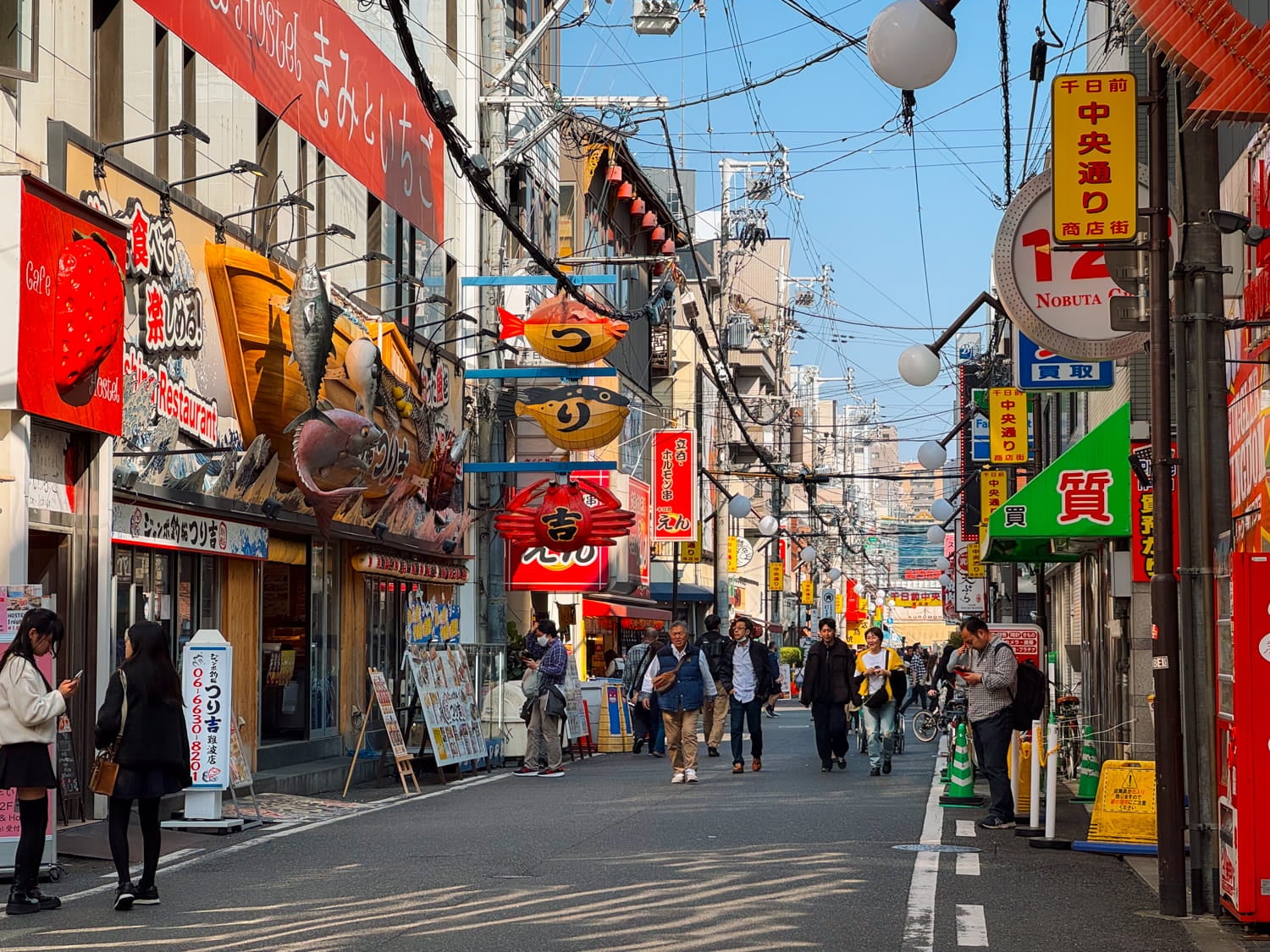
We really enjoy Osaka’s laid-back, grungy (in a good way!), artistic atmosphere.
Locals feel more open and social, and you can easily immerse yourself in daily Japanese life without feeling like a tourist (despite being one!).
We’ve stayed in multiple areas across Osaka now, and there’s a reason we keep going back for slow stays while working remotely and traveling!
Having temporarily “lived” in Osaka a few times, both solo and with my partner, for long stays (from two weeks to one month+), I’m sharing my favorite areas/neighborhoods, monthly costs, and tips in this guide.
Here’s my round-up of what to know before choosing Osaka as your digital nomad base in Japan.
Before You Go — Osaka Digital Nomad Essentials

For Osaka, you typically don’t have to plan too far ahead for accommodation/rent or activities. In fact, we often fall back on Osaka as a safety net because there’s more accommodation availability and weekend trip possibilities.
Here’s what I’d recommend thinking about in advance, in case you are looking to spend a couple of weeks or months here under the Japan digital nomad visa (or just as a remote worker on a 3-month visa).
1. Get Travel Medical Insurance for Osaka
If you’re staying in Osaka for more than a short vacation, get travel medical insurance for peace of mind, especially given Japan’s frequent earthquakes (a 4.2-magnitude quake shook us from our sleep this morning!!). 🤯
For long-term/slow travel, I personally use and can recommend SafetyWing.
It’s designed specifically for digital nomads and remote workers, covering you across multiple countries while allowing you to start, stop, or extend coverage as your plans change! (This is a sponsored recommendation — I only partner with brands I use and trust.)

I’ve been using SafetyWing since 2018 (yes, really!) since we first moved to Mexico, because it:
- Covers emergency medical care and hospitalization
- Includes doctor visits, prescriptions, and accidents
- Works on a rolling monthly basis instead of fixed travel dates
The best part? Coverage starts instantly and costs less than an okonomiyaki dinner for two in Osaka (Osaka’s best dish that you must try!!). Get covered here.
2. Download a Japan eSIM
Next, while Japan has fast, reliable internet (with free Wifi at times in public spaces) — and while Osaka is no exception — you’ll want to get connected as soon as you land!
For that, I always use an easy-to-download Japan eSIM.
An eSIM is the simplest option for long stays, allowing you to top up data as needed without hunting down SIM cards or contracts.
Osaka’s coffee shops/cafes, Airbnbs/apartments, and coworking spaces have good WiFi, but I think having data on your phone is still essential for navigation (Google Maps!) and translating menus. 😅
3. Plan Your Osaka Must-Have Experiences in Advance
While Osaka is definitely more laid-back than Tokyo or Kyoto, popular experiences and tickets (like Universal Studios Passes) still sell out, so book in advance if you want to take:
- Food tours and cooking classes (like this ultimate Osaka street food tour)
- Cultural workshops or neighborhood walking tours
- Organized day trips to nearby cities like Nara, Kobe, Uji, or Kyoto!
On our second digital nomad stay in Osaka, we planned 4 of our weekend trips in advance, before we even got there, so our workweek was relaxed, and we could focus on our creative output rather than planning and exploring every day!
4. Join Osaka’s Digital Nomad & Expat Community
One of Osaka’s biggest perks is its vibrant community. The city has a reputation for being friendly, informal, and down-to-earth for a reason.
It’s why we love spending a slow month in Osaka: it feels much more relaxed and flexible than Tokyo, for example.
If you want to quickly get integrated into the digital nomad scene, I recommend:
- Joining Osaka-based expat or digital nomad groups like this one
- Attending coworking events or language exchanges at cafes/bars!
- Using Meetup to find events (this is how we made friends as digital nomads in Tokyo!)
Basically, Osaka is a great city for building community if you’re staying for the long term. One month is a decent amount of time to get acquainted, make friends, and get a feel for Osaka beyond the typical 1-day itinerary!
Where to Stay in Osaka for Nomads — Best Neighborhoods for Long Stays
Now, where should you stay in Osaka? As a digital nomad, I recommend these three “core” areas:
- Around or close to Umeda (to the east and north, specifically)
- Southside Osaka (around Tennoji)
- Eastern Osaka (residential and budget-friendly)

Umeda (North Osaka)
I find Umeda to be one of the best places to stay in Osaka for digital nomads, thanks to it being a major transport hub with fast connections to Kyoto, Uji, and Kobe. Look for accommodation within a 10-minute walk of the station!
We once stayed for two weeks, even further north, across the river in Juso, and loved it, although it felt a bit far from the center/south of Osaka.
Being closer to the main hub makes it easier to visit, and there are countless eating and shopping options. 😋
Note: Avoid Kujo/the port area (West Osaka) 📝
If you go too far west of Umeda, you’ll end up in the port area. It’s more industrial, with a few nice spots (actually had the best gyoza of my life out here), but this area is not as convenient, has fewer tourist-friendly spots, and has a little-known red light district that we accidentally ended up strolling in, and it was very awkward (but a learning experience!).
East Osaka
On our third stay in Osaka as nomads, we chose to stay in East Osaka. It offers a quieter, more residential experience that feels way more local rather than touristic, with neighborhood restaurants and everyday shops, while still being well connected by train.
We loved it here, and funnily enough, the area we stayed in was called “Miyakojima,” named after the Okinawan island we also spent a slow month in last summer! (It was a little sign for us to stay here, and I’m glad we did!)
South Osaka (Tennoji & Further Down)
South Osaka, particularly from Tennoji down through Nishinari to the Sumiyoshi Ward (near the famous Shino shrine), is best if you want convenient access for activities and sightseeing without feeling cut off from the rest of Osaka.
Finding Accommodation (Apartments, Guesthouses, & Colivings)

Becuase of Osaka’s student population, share houses are very popular.
I’ve not been successful in finding great colivings in Osaka geared toward foriegn nomads (aside from COGO Tennoji maybe, which is more like a social hostel with a coworking/coliving hotel atmosphere), so we’ve defaulted to finding private month-long rentals through Airbnb, Facebook listings, and housing sites in Japan (e.g., Dash Living, eHousing, Apartments-Japan).
On Airbnb, we’ve found month-long stays from $800–$1600 per month (USD); obviously, with varying quality i.e., natural light, dedicated workspace with office chairs, prime location, etc!


However, if you can rent more locally, you can get way better deals reserving a space directly, like this listing above, which was available for $550 USD (85,000 JPY).
Start your search with those neighborhoods/wards I mentioned above! And then zoom further out, to adapt to your budget or availability.
Remote Working in Osaka — WiFi, Co-Working Spaces, & Work-Friendly Cafes

Osaka’s coffee and cafe scene is great, so if I have to decide between a strict, quiet coworking space (with a steep day pass fee), or a cozy coffee shop with WiFi (that serves great food + drinks), then you’ll find me in the latter.
Our month-long stays in Osaka were filled with multiple weekdays going to different cafes.
A few spots consistently worked well, even if there was occasional noise, crowds, or WiFi inconsistency:
- LiLo Coffee Roasters — worked well for lighter laptop sessions
- SOT COFFEE ROASTER — cute local roastery with space and WiFi that’s good for settling in for a couple of hours!
- Streamer Coffee Company — A favorite, has a creative vibe and good coffee
- Sanwa Coffee Works — Well-rated local cafe in the Tenma area (nearby Tenjinbashi-suji, the longest shopping street!)
Our weekly go-to, though, was Brooklyn Coffee Roasters, which I loved for its spaciousness and atmosphere. I even bumped into a fellow digital nomad I knew there whom I had met just weeks prior at a travel blogging conference in Alaska!
Cost of Living in Osaka as a Digital Nomad
Surprising to most, Osaka isn’t that expensive for a longer stay. Rent-wise, I feel it’s more accessible than Tokyo, even if you do rent monthly on expensive platforms like Airbnb.
If you’re willing to be flexible with location and dates, you can also lower cost for accommodation. As for food and activities, and all the rest, well, Osaka can be as budget-friendly or as costly as you can whip up!

As slow travelers, we don’t really indulge in nightlife, a part from a food/izakaya tour (which is a must-do in Japan’s kitchen!). On the other hand, I’m ready to drop hundreds on merch and express passes for Super Nintendo World, so this matter of costs really is subjective. 😅
Considering all, you may spend more on transport than expected, as Osaka is fairly large and not as well-connected (in my opinion) as Tokyo. But again, it depends on where you’re staying, your travel style, etc.
Realistically, I’d say Osaka is especially good value for longer stays, speaking as a couple looking for a slow month somewhere. And that’s based off not just our experience but in regarding Osaka as one of the best cost-to-quality cities in Japan for students and digital nomads. I’d add that it’s noticeably more affordable than Tokyo (which still can be manageable).
Getting Around Osaka — Transport Tips for Long Stays

On the note of transport, getting around central Osaka is easiest with Osaka Metro. Rarely would you need the JR line, unless you’re traveling between wards or going on day trips to Nara, Kobe, etc.
For Osaka (and anywhere else in Japan), grab an IC card for tapping in/out of the trains and subways.
In Osaka, you can buy a physcial IC card (ICOCA) or download a digital version on your Apple iPhone (save to wallet) or Apple Watch. Then, you can top it off with a credit card for on the go.
Next, Osaka really runs north–south, so you’ll mostly be using the Midosuji Line (the red line). This is the single most useful line in Osaka and the one we relied on daily. Major stops include Umeda, Shin-Osaka, Shinsaibashi, Namba, and Tennoji (basically, everywhere you’d need to go visit Osaka’s tourist hotspots!).
💡 Alternatively, if you want to save all your sightseeing for one or two days, you can pick up an Osaka Amazing Pass, which includes unlimited transport on Osaka’s lines, plus free entry to around 40 of its top attractions!
Activities & Lifestyle in Osaka — Things to Do Beyond the Tourist Trail
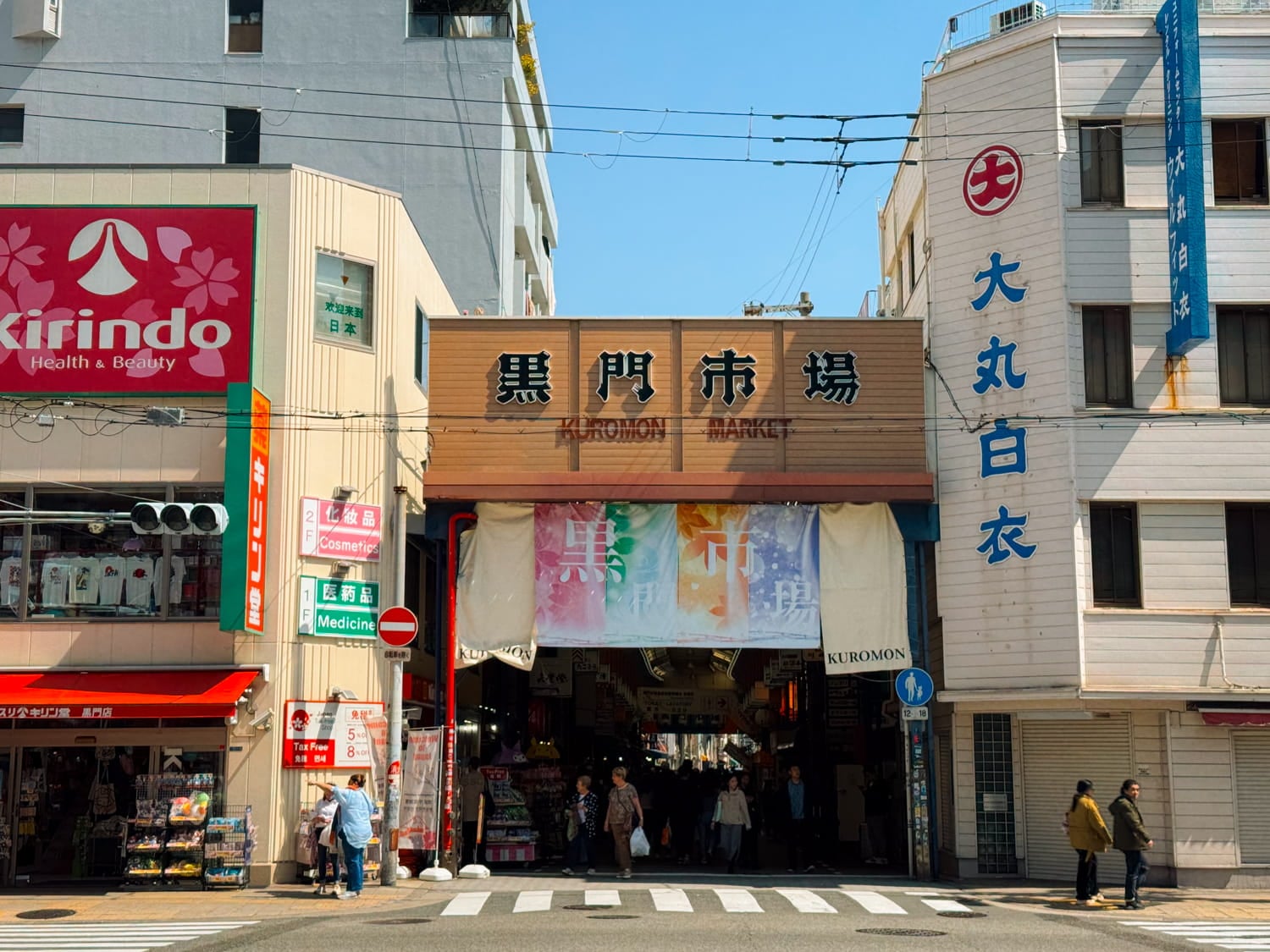
I think the main reason to choose Osaka as a digital nomad is for its laid-back lifestyle and accessibility for adventures!
I feel like I can get into an everyday routine here, which for working remotely, feels nice. There’s no pressure to “sightsee.” And we’ve found as a nomad couple that Osaka has a lot of hidden corners and gems that most tourists don’t see.
Our lifestyle as digital nomads in Osaka looks like:
- Walking around local neighborhoods like Tennoji, Nakazakicho, or Fukushima-ku
- Remote working from cute cafes and coffee shops! ☕️
- Eating in izakayas, soba shops, and okonomiyaki restaurants (check out Nakazakicho or Kyobashi for little lantern-lit alleyways!)
- Spending time in Tennoji Park or along Nakanoshima’s rivers
- Exploring shotengai / retro shopping streets and local markets
- Taking easy day trips to Kyoto, Nara, or Kobe!
While we do visit the famous areas, Osaka also has tons of parks, temples, and riverside walks to explore.

It’s also a great base for doing more slow travel around Kansai, with simple weekend trips that don’t require changing bases. This is how we’ve learned about Kurashiki, Himeji, Wakayama, Arima Onsen, and other great weekend destinations from Osaka!
My Final Thoughts + Being a Responsible Nomad in Osaka

Osaka, despite its size, can feel easy. Why?
Because revisiting the same cafe, the same lunch spot, the same neighborhood streets across a month makes the city feel welcoming and familiar. And I think locals respond to familiarity.
You’ll notice that many locals avoid peak tourist spots (i.e. Osaka Castle, Namba, Dotonbori) and hours whenever possible. Restaurants, trains, and even parks outside the central area are where you’ll find more “local” Osaka. It’s the same for Tokyo.
Another thing you may notice is that Osakans may seem reserved at first, but repeated visits and respectful behavior often leads to small conversations, and cute moments of exchange and kindness (at least, this has been the case for us!). Being low-key, polite, and consistent opens more doors than being overly outgoing.
Finally, I’ve found Osaka works best for long-term stays when you don’t try to do everything. Locals don’t rush the city, and neither should you!